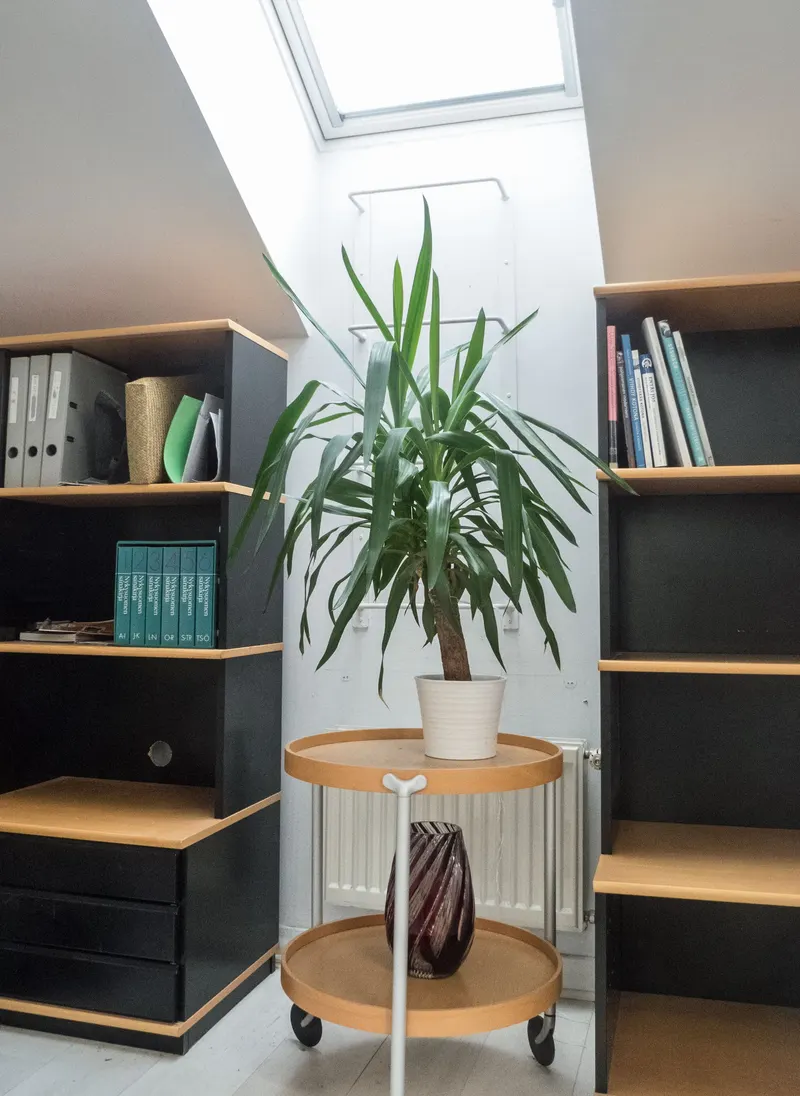
What it does for you
Unlike most yuccas, this one has no sharp spines at the leaf tips1. It's a popular, low-maintenance houseplant1. Gardeners' World calls it a great plant for beginners: easy, tolerant of neglect and able to cope with some direct sunshine2.
Origin & history
It grows wild from central Mexico to Panama, as a tree, mainly in the seasonally dry tropics3. Outdoors it reaches 8–12 metres4 – it's the tallest of the yuccas5. It was introduced into Florida in 1956 as a substitute for the spiny Spanish bayonet5.
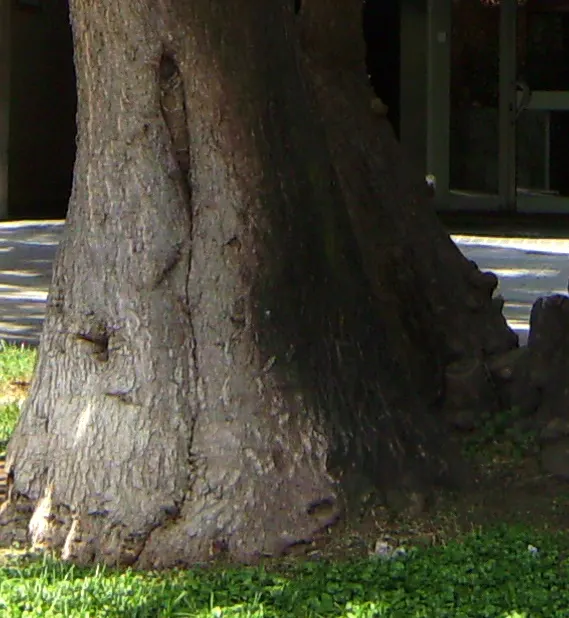
Its former name Yucca elephantipes refers to the thick trunk that resembles an elephant's foot1; today's accepted name is Yucca gigantea3. The genus name comes from a name for cassava (yuca), which isn't closely related6. NC State also calls it giant or soft-tip yucca1, GRIN giant yucca7, Gardeners' World yucca cane2.
Caution
The ASPCA lists yuccas as toxic to cats and dogs: they contain saponins, the main sign is vomiting8. NC State rates the poison severity as low; eaten, the leaves and roots can cause nausea, vomiting, diarrhoea, headaches and dizziness in people1. For pets we use the more cautious rating. The RHS lists it as a skin allergen and advises gloves4; NC State says the sap can cause minor rashes1.
Care
Light. Yuccas need a sunny spot all year, with light shade from direct summer sun. Too little light can make the leaves sag. Turn it regularly, or it grows lopsided towards the light9. From late spring to late summer it can stand outside in a sheltered spot, as long as it is stable in the wind9.
Water. Water when the top few centimetres of compost are dry, and let surplus water drain away; water more sparingly in winter2 – as a rule of thumb every 1–2 weeks in summer. Overwatering is the bigger danger2: it can cause root rot1.
Temperature & humidity. Normal indoor temperatures and humidity suit it; keep it away from cold draughts and sudden temperature changes1. No need to mist2. The minimum varies: the RHS names 10 °C for houseplants, and 7 °C at night during the winter rest9; NC State says to bring it in below 50 °F (10 °C)1 – to be safe, keep it above 10 °C.
Soil, pot & repotting. Loam-based compost (John Innes No 2) with 20–30 % extra grit9, or one part potting mix to three parts perlite or sand1. It does well slightly pot-bound: repot every two or three years in spring; for big plants, replace the top compost instead. A sturdy pot keeps it from toppling2.
Feeding. The sources differ: fortnightly from spring to early autumn9, monthly4, or every couple of months at half strength2. We go with monthly; none in winter9.
Extras
Houseplants rarely flower1. Outdoors, mature plants carry spikes up to 1 m long with creamy-white, hanging flowers4. The flowers are edible and can be used in salads5.

Symptoms & help
| too little | too much | |||
|---|---|---|---|---|
| Water | Crisp, brown lower leaves; sagging, droopy leaves. → Water thoroughly once the top few centimetres are dry, and let surplus water drain away. | Lower leaves suddenly turn yellow and limp; stems or roots rot. → Let it almost dry out. If roots rot, remove them and repot in a pot just big enough. | ||
| Light | Leaves sag and droop or turn pale. → Move it somewhere brighter – some direct sun is fine. | |||
| Warmth | Damage and dieback after cold or frost. → Keep it above 10 °C, away from cold draughts and sudden temperature changes. |
Take it with you
- Plant cardFront and back in A6 landscape – print it and keep it next to the pot
- PDF ↓
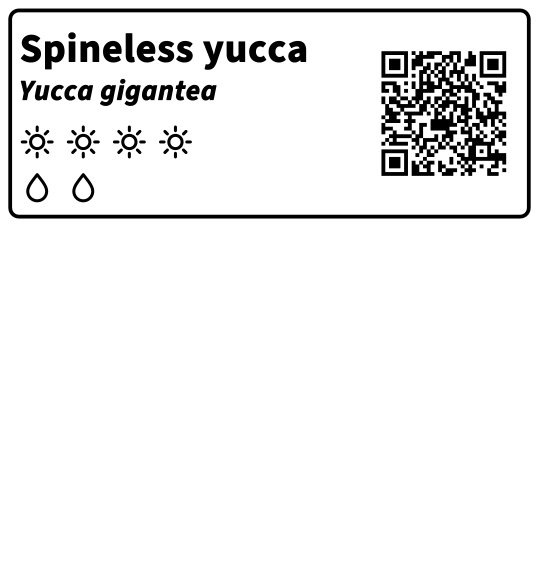
Notes on the files: Print & engrave
Licence and attribution for the plant labels: Readme (TXT)
Sources
- North Carolina State Extension: Yucca gigantea (Giant Yucca, Soft-tip Yucca, Spineless Yucca). NC State Extension Gardener Plant Toolbox. https://plants.ces.ncsu.edu/plants/yucca-gigantea/ (accessed 20 October 2026)
- BBC Gardeners' World Magazine (2024): How to grow a yucca plant. BBC Gardeners' World Magazine, Grow Guides. https://www.gardenersworld.com/house-plants/how-to-grow-yucca/ (accessed 20 October 2026)
- Royal Botanic Gardens, Kew: Yucca gigantea Lem. Plants of the World Online. https://powo.science.kew.org/taxon/urn:lsid:ipni.org:names:543700-1 (accessed 20 October 2026)
- Royal Horticultural Society: Yucca gigantea (spineless yucca). RHS Plant Profile. https://www.rhs.org.uk/plants/522674/yucca-gigantea/details (accessed 20 October 2026)
- Gilman, E. F., Watson, D. G., Klein, R. W. & Hilbert, D. R.: Yucca gigantea: Spineless Yucca. UF/IFAS Extension, Publication ENH-831/ST675. https://ask.ifas.ufl.edu/publication/ST675 (accessed 20 October 2026)
- Missouri Botanical Garden: Yucca elephantipes. Plant Finder. https://www.missouribotanicalgarden.org/PlantFinder/PlantFinderDetails.aspx?kempercode=b538 (accessed 20 October 2026)
- USDA, Agricultural Research Service, National Plant Germplasm System: Yucca guatemalensis Baker. Germplasm Resources Information Network (GRIN Taxonomy). https://npgsweb.ars-grin.gov/gringlobal/taxon/taxonomydetail?id=411390 (accessed 20 October 2026)
- ASPCA Animal Poison Control Center: Yucca (Yucca spp.). Toxic and Non-Toxic Plant List. https://www.aspca.org/pet-care/aspca-poison-control/toxic-and-non-toxic-plants/yucca (accessed 20 October 2026)
- Royal Horticultural Society: Yucca. RHS Advice Guide. https://www.rhs.org.uk/plants/yucca/growing-guide (accessed 20 October 2026)
- DelPrince, J. M. & Perry, J. H. (2021): Care & Selection of Indoor Plants. Mississippi State University Extension, Publication 1012. https://extension.msstate.edu/publications/care-selection-indoor-plants (accessed 11 October 2026)
- Lüttge, U. (2004): Ecophysiology of Crassulacean Acid Metabolism (CAM). Annals of Botany 93, 629–652. doi:10.1093/aob/mch087
- Royal Horticultural Society: How to take cuttings from houseplants. RHS Growing Guide. https://www.rhs.org.uk/plants/types/houseplants/how-to-take-cuttings-from-houseplants (accessed 14 October 2026)
- Royal Horticultural Society: Palms: indoors. RHS Advice. https://www.rhs.org.uk/plants/types/trees/indoor-palms (accessed 12 October 2026)